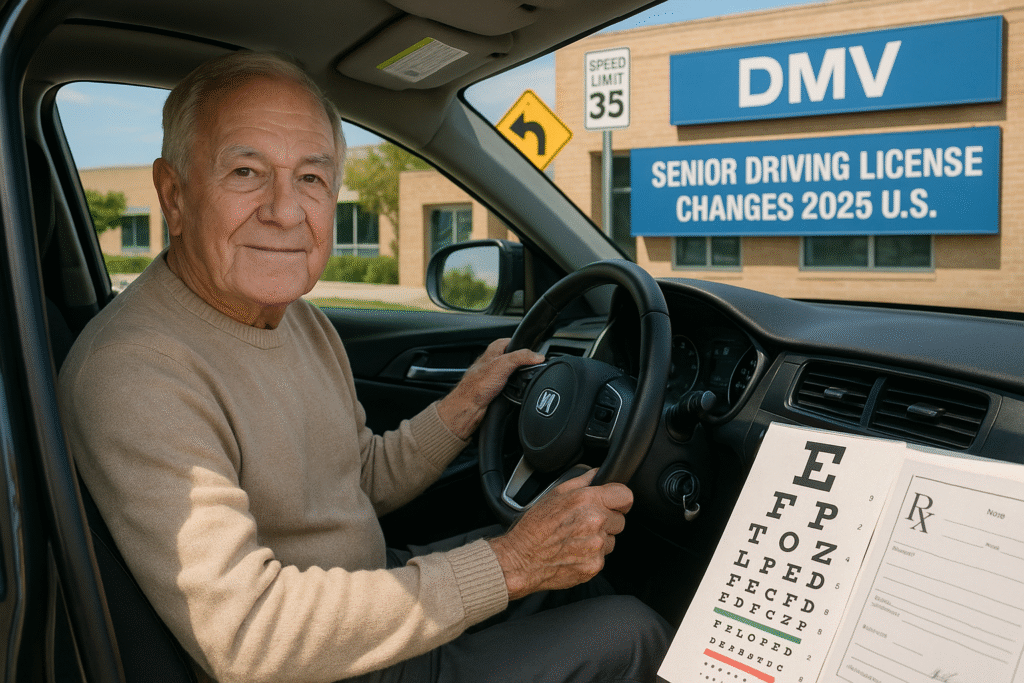
Driving has always symbolized freedom in America. For seniors, the car is not just a vehicle it’s independence, self-reliance, and the ability to stay socially connected. But starting September 2025, big adjustments are coming under the senior driving license changes 2025 US framework. These reforms aim to make the roads safer without unfairly restricting older drivers.
The federal government is introducing stricter renewal requirements, medical and cognitive evaluations, and in certain cases, restricted licenses. These US driving license seniors changes will directly affect millions of drivers aged 70 and above. Let’s explore the key points, the reasoning behind the law, and how older drivers and their families can prepare.
Why the 2025 driving license rules are changing
The United States is aging rapidly. Today, more than 48 million Americans aged 65+ hold a valid driver’s license. Within the next decade, that number could exceed 60 million. For these drivers, losing the ability to drive isn’t just inconvenient. It can mean losing independence.
But aging brings challenges: slower reflexes, reduced vision, and in some cases, cognitive decline. While seniors are generally cautious drivers, they are also more vulnerable in accidents due to frailty. Policymakers designed the US driving license rules changes to strike a balance between safety and freedom.
Key features of the new 2025 license renewal system
Instead of one universal rule, the new law uses a tiered renewal system. The requirements get stricter with age, ensuring fair evaluation:
| Age Group | Renewal Requirements | Notes |
|---|---|---|
| 70–79 years | Standard renewal + vision and reflex tests | Some states allow online renewal |
| 80–86 years | In-person renewal every 2–4 years | Cognitive exams may be required |
| 87+ years | Annual road test + medical clearance | Must prove driving capability each year |
This tiered approach is the backbone of the senior driving license changes 2025 US, making safety checks more personalized.
Tests seniors will face under the new law
The US driving license seniors changes add new tests designed to measure real driving capability:
Vision test
Good vision is non-negotiable for safe driving. Seniors will undergo regular checks for clarity, peripheral awareness, and depth perception. Florida already requires vision exams for those over 80.
Reflex and reaction test
Quick reflexes are vital. A simple reaction-time assessment ensures drivers can respond to sudden hazards, such as braking cars or pedestrians crossing.
Cognitive exam
This test evaluates memory, problem-solving, and decision-making. Seniors might be asked to identify road signs, respond to timed scenarios, or recall instructions.
Practical driving test
Mandatory for those 87+, or drivers flagged by doctors, family, or state authorities. It evaluates lane changes, highway merging, and city driving skills.
Reporting unsafe drivers
Another important part of the US driving license rules changes is the reporting mechanism. Families, doctors, or even concerned citizens can alert authorities about unsafe senior drivers. The Department of Motor Vehicles (DMV) will then require the individual to undergo testing.
To prevent misuse, reports must be based on legitimate safety concerns, not personal conflicts.
How states will implement the federal rules
While this is a nationwide policy, states retain flexibility. Here’s how some will adapt the senior driving license changes 2025 US:
- California: In-person renewals from age 70.
- Florida: Mandatory vision checks from age 80.
- Texas: Annual renewals at age 85.
- New York: Doctor’s medical clearance required starting at age 80.
This flexibility allows states to adapt the US driving license seniors changes to their unique demographics.
Restricted licenses: a middle ground
Instead of taking away licenses completely, the government will issue restricted licenses in some cases. These allow seniors to keep driving, but with limitations:
- Only during daylight hours
- Within a limited radius of home
- No highway or high-speed driving
This approach keeps independence intact while reducing road risks.
Alternatives to personal driving
The US driving license rules changes recognize that some seniors will eventually stop driving. That’s why more alternative mobility solutions are being promoted:
- Ride-sharing: Uber and Lyft now offer senior-friendly options.
- Community shuttles: Free or low-cost rides to medical appointments or grocery stores.
- Paratransit services: Public transport tailored to seniors with mobility issues.
- Volunteer driver programs: Nonprofits helping seniors stay mobile.
- Family support: Relatives and neighbors stepping in when needed.
Wider impact of the 2025 senior license law
The senior driving license changes 2025 US will impact more than just drivers:
- Insurance: Premiums may adjust based on testing results or restricted licenses.
- Healthcare: Doctors will play a bigger role in assessing fitness to drive.
- Car market: Demand could rise for smaller, adaptive vehicles tailored to seniors.
- Family dynamics: Adult children may need to step in more often.
By the numbers: senior drivers in the US
Here are some stats that explain why the US driving license seniors changes are necessary:
- 48+ million Americans aged 65+ currently have a license.
- By 2035, that number may exceed 60 million.
- Seniors get into fewer accidents per capita than younger drivers.
- But 16% of fatal crashes involve drivers aged 70+.
- Older drivers are more likely to suffer serious or fatal injuries.
These figures highlight why the US driving license rules changes are designed to ensure safety while respecting independence.
Balancing safety with independence
For many seniors, losing a license feels like losing part of their identity. But the new rules don’t aim to punish. Instead, the senior driving license changes 2025 US provide:
- Testing instead of blanket restrictions
- Restricted licenses instead of full bans
- Alternatives to keep seniors mobile
This balance helps maintain dignity while protecting all road users.
Looking forward: what comes after 2025?
The 2025 rules are just the beginning. Future developments could reshape senior mobility even more:
- Wider use of driver-assistance technology (ADAS) in senior-friendly vehicles.
- Autonomous cars providing mobility for non-drivers.
- Community programs reducing isolation for those who give up driving.
As the US driving license seniors changes evolve, policymakers, families, and industries will all play a role in shaping what comes next.
Conclusion
The senior driving license changes 2025 US mark a historic shift in American road safety policy. By introducing vision, reflex, and cognitive testing, along with flexible state-level rules, the US driving license rules changes focus on ability, not just age. With restricted licenses and growing mobility alternatives, older adults won’t be cut off from independence overnight.
The real question is no longer whether seniors can drive, but how to ensure they do so safely, fairly, and with dignity.