The early history of Mercedes-Benz
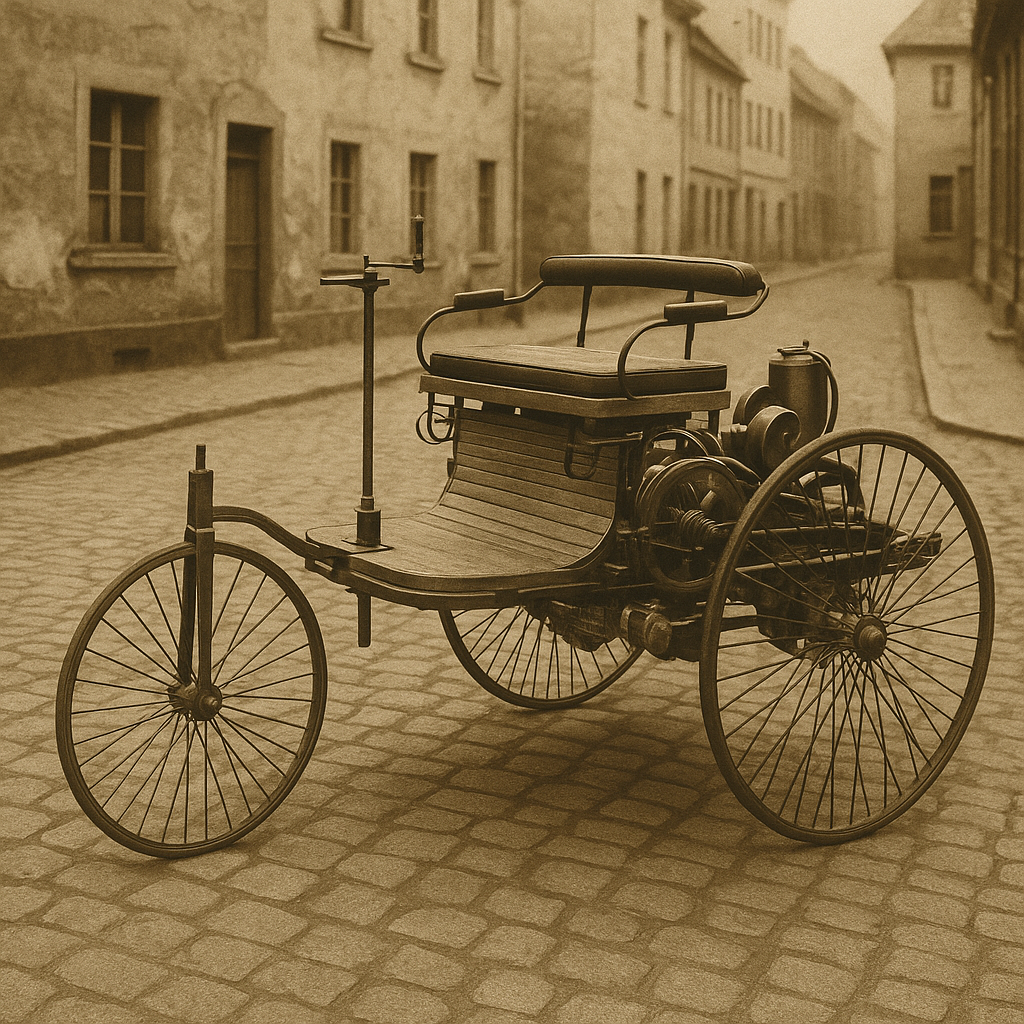
When people talk about the Mercedes-Benz history, they often begin in 1886, when Karl Benz created the world’s first motorized vehicle – the Benz Patent-Motorwagen. This single invention marked the beginning of the history of Mercedes Benz as we know it today. Karl Benz’s contribution is well documented by Britannica’s biography of Karl Benz, which highlights his revolutionary vision and persistence in developing the motorcar.
At the same time, Gottlieb Daimler and Wilhelm Maybach were experimenting with high-speed engines, setting the stage for a merger of genius minds. Eventually, in 1926, Benz & Cie. and Daimler-Motoren-Gesellschaft merged, creating the company we recognize as Mercedes-Benz.
Mercedes-Benz logo history and evolution
One of the most fascinating parts of the Mercedes-Benz logo history is how it evolved alongside the brand’s growth. The famous three-pointed star symbol, representing dominance over land, sea, and air, has gone through several redesigns since the early 1900s. Collectors and enthusiasts often trace the Mercedes logo evolution history old logos to see how the brand identity matured over time.
The Mercedes-Benz logo history evolution shows simplicity winning over complexity, with the sleek three-pointed star eventually becoming one of the most recognizable symbols in the automotive world. For a detailed overview of these changes, the Mercedes-Benz corporate history page provides official insights.
Table: Mercedes logo evolution history
| Year | Logo Description | Notes |
|---|---|---|
| 1902 | “Mercedes” wordmark | First time the name Mercedes appears. |
| 1909 | Three-pointed star registered | Symbolizes land, sea, and air. |
| 1916 | Star in a circle | First modernized version. |
| 1926 | Merger emblem | Combines Benz laurel wreath with Daimler star. |
| 1933 | Simplified circle star | More modern, minimalist. |
| 1989 | Sleek chrome star | Global recognition grows. |
| 2008 | Refined 3D chrome | Current modern version. |
A Mercedes-Benz history timeline
Looking at a structured Mercedes-Benz history timeline, the story unfolds as a journey of technological progress:
- 1886: Karl Benz patents the Motorwagen.
- 1901: The name “Mercedes” is first used for a car built by Daimler-Motoren-Gesellschaft.
- 1926: The merger of Benz & Cie. with Daimler-Motoren-Gesellschaft forms Mercedes-Benz.
- 1930s: The brand introduces luxury sedans and pioneering diesel engines.
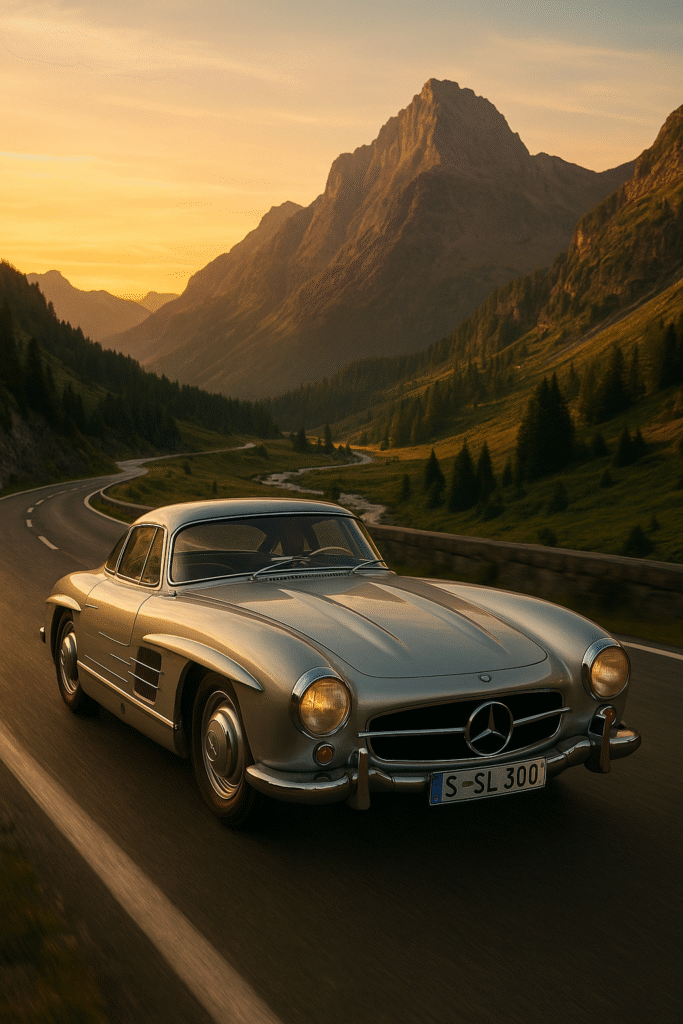
- 1950s: Mercedes gains fame with the 300 SL “Gullwing,” a sports icon.
- 1960s: Known for durable sedans like the W110 and W111.
- 1970s–1980s: Advances in safety, including ABS and airbags.
- 1990s–2000s: Expansion into SUVs, high-performance AMG models, and global luxury leadership.
- 2010s–Present: Innovation in electric mobility, EQ models, and autonomous driving.
You can explore these milestones in more detail on the Mercedes-Benz Group official history page.
Mercedes-Benz service history and heritage
Owning a Mercedes is not just about driving – it’s also about maintaining a strong Mercedes-Benz service history. A complete Mercedes service history not only preserves the car’s value but also reflects the company’s century-old commitment to quality and reliability. For classic models, enthusiasts often turn to the Mercedes-Benz Museum in Stuttgart, which showcases vehicles dating back to the brand’s earliest years. Here, the Mercedes history comes alive, with old models, engineering achievements, and design highlights on display.
Expanding the legacy: detailed history of Mercedes-Benz
Pioneering the automobile (1886–1900)
Karl Benz’s 1886 Motorwagen is widely considered the first true automobile. It was a three-wheeled, gasoline-powered vehicle that revolutionized personal transportation. His wife, Bertha Benz, famously undertook the first long-distance journey in the Motorwagen, proving its practicality. This was the true foundation of the history of Mercedes-Benz.
The rise of Mercedes (1900–1920)
The name “Mercedes” came from Emil Jellinek, a businessman who named the cars after his daughter. The Mercedes 35 HP of 1901 is considered the first modern car, with a long wheelbase, low center of gravity, and powerful engine. This stage solidified the early Mercedes history.
Merger and growth (1920s–1940s)
The 1926 merger created Mercedes-Benz, combining technical expertise and engineering excellence. During the 1930s, the company became famous for its luxury sedans and dominant racing cars like the Silver Arrows, crucial chapters in the history of Mercedes Benz.
Post-war revival (1950s–1960s)
After World War II, Mercedes-Benz rebuilt its reputation with vehicles like the 300 SL “Gullwing.” This era also introduced many sedans that established the company as a leader in safety, comfort, and reliability.
Innovation in safety and performance (1970s–1980s)
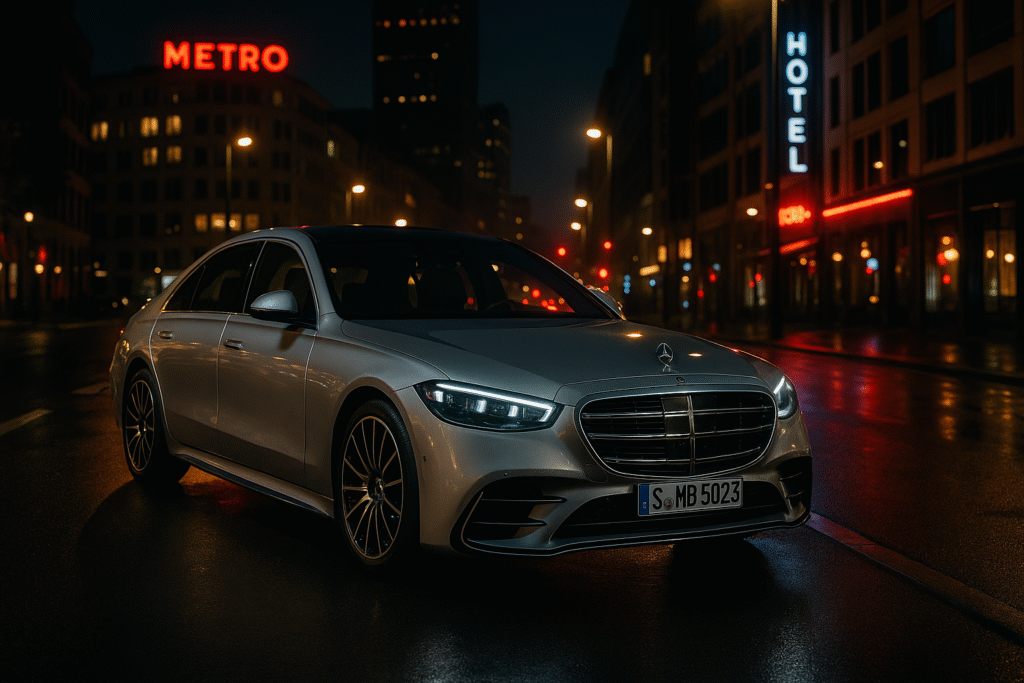
Mercedes-Benz was at the forefront of vehicle safety innovations, introducing crumple zones, ABS brakes, and airbags. Models like the S-Class became benchmarks for luxury sedans.
Global expansion and diversification (1990s–2000s)
The 1990s saw the rise of SUVs like the M-Class and partnerships with AMG to produce high-performance models. Mercedes also expanded its lineup globally, reaching new markets and setting sales records.
Entering the electric era (2010s–present)
With the launch of EQ electric models, Mercedes-Benz continues to innovate in sustainability and autonomous driving technology. The three-pointed star remains a global symbol of luxury and innovation.
Conclusion
The Mercedes-Benz history is more than just the story of a car company – it is the story of innovation that shaped modern mobility. From the history of Mercedes beginnings with Karl Benz, through the Mercedes-Benz logo history, to today’s pioneering electric vehicles, the brand continues to set benchmarks. Whether tracing the Mercedes logo historyor the Mercedes-Benz service history, the company’s legacy remains unmatched.